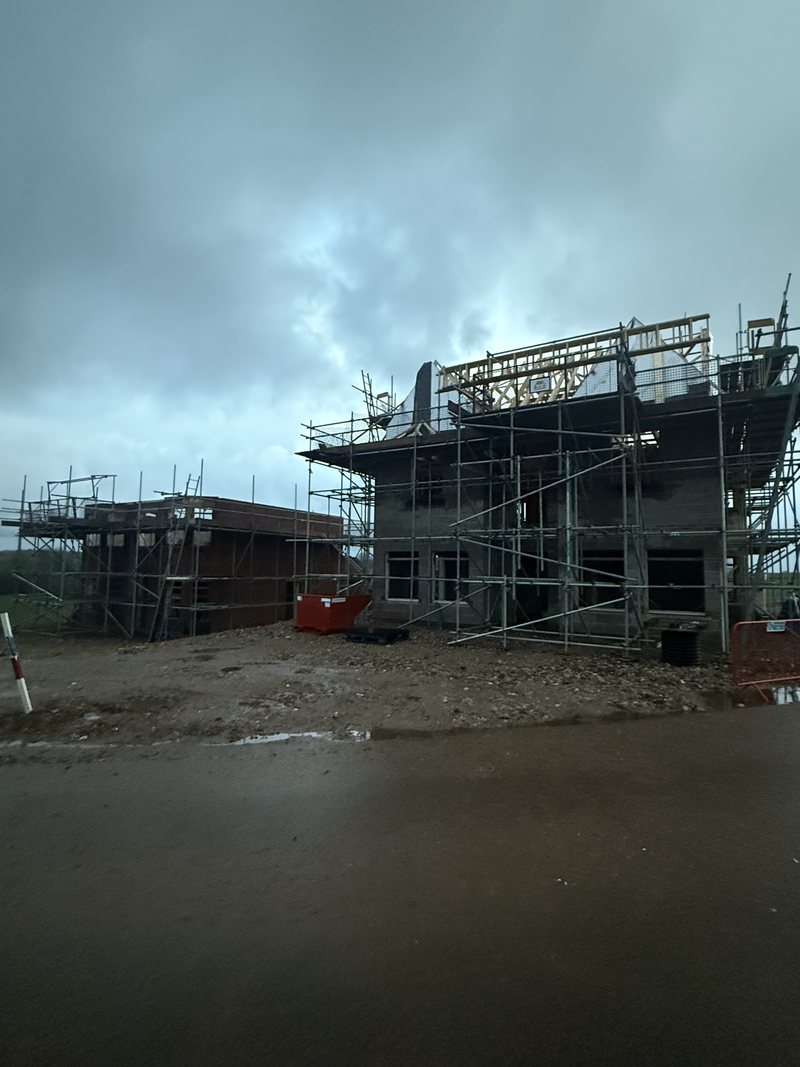
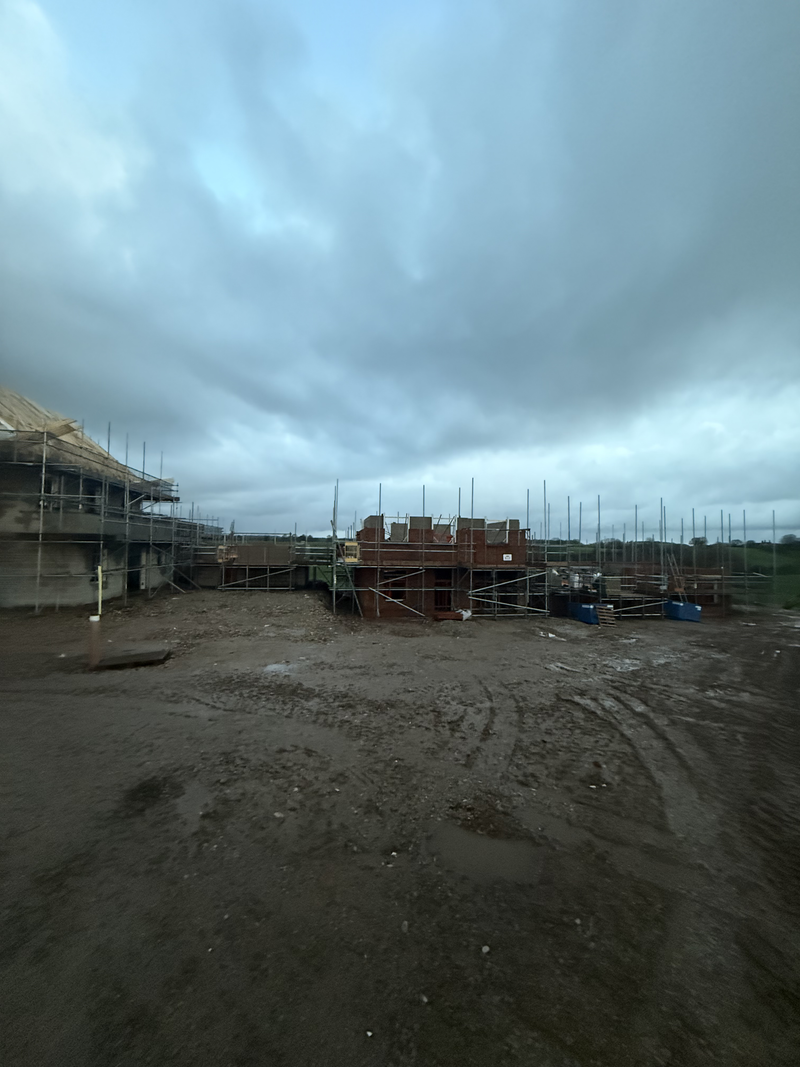
new build property
new build Property's and exstentions
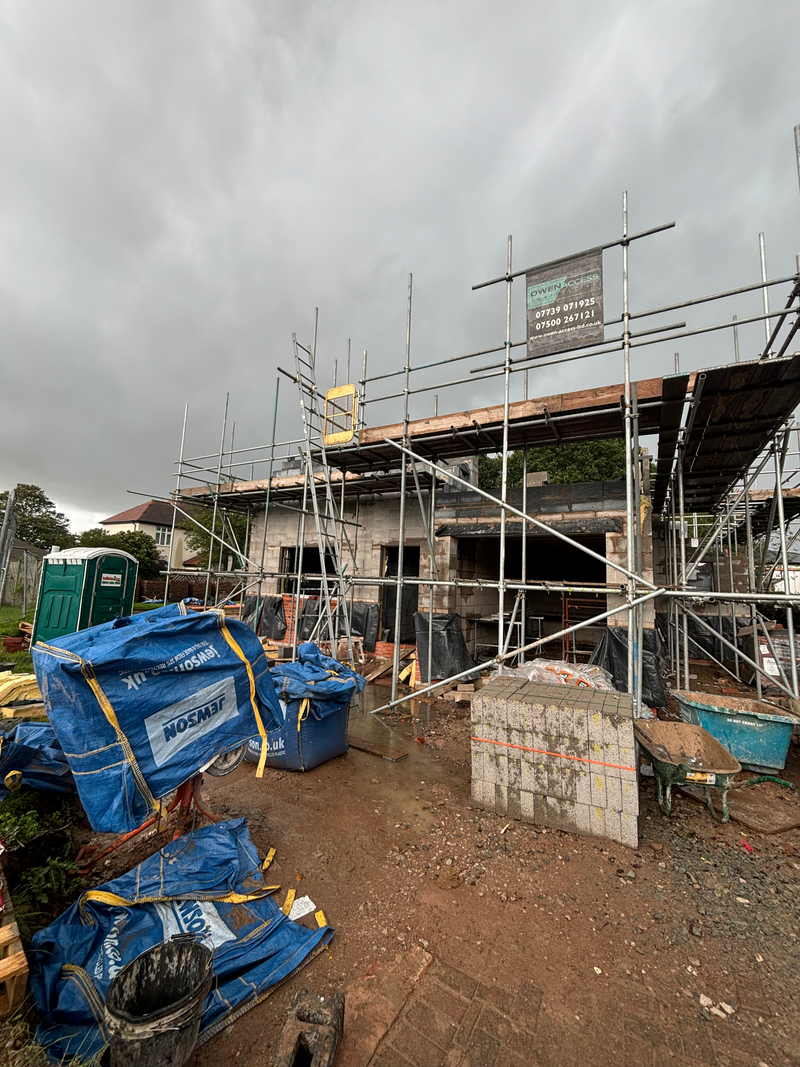
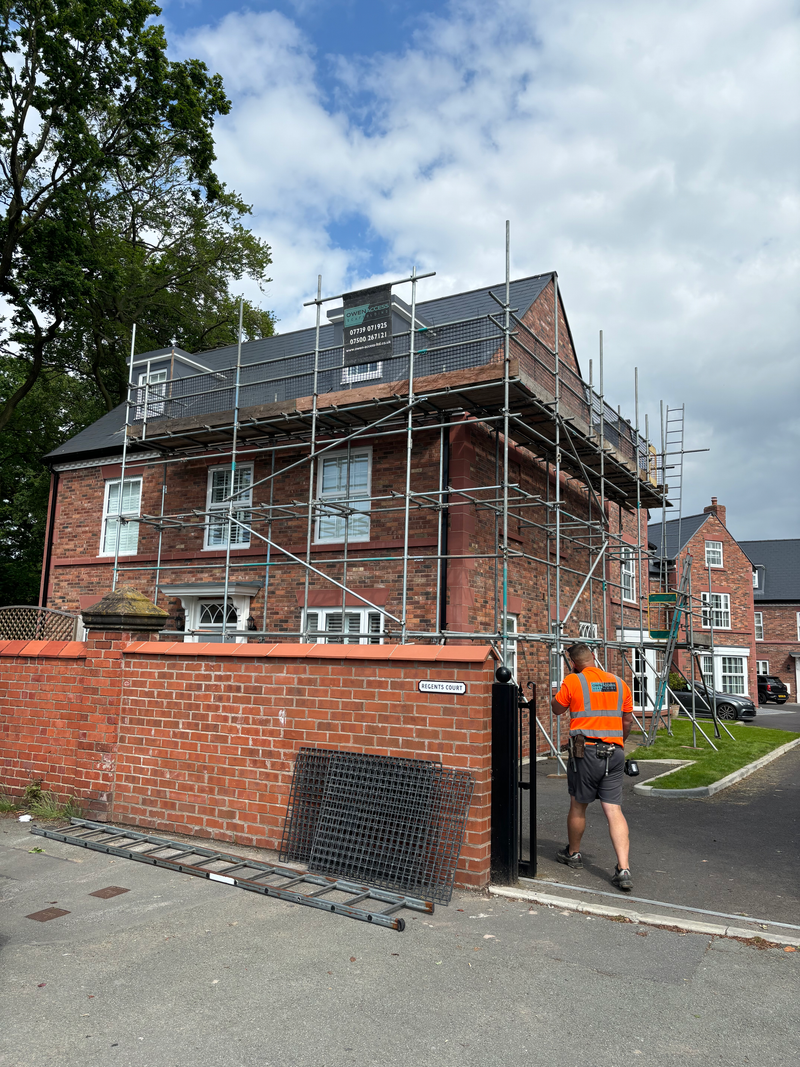
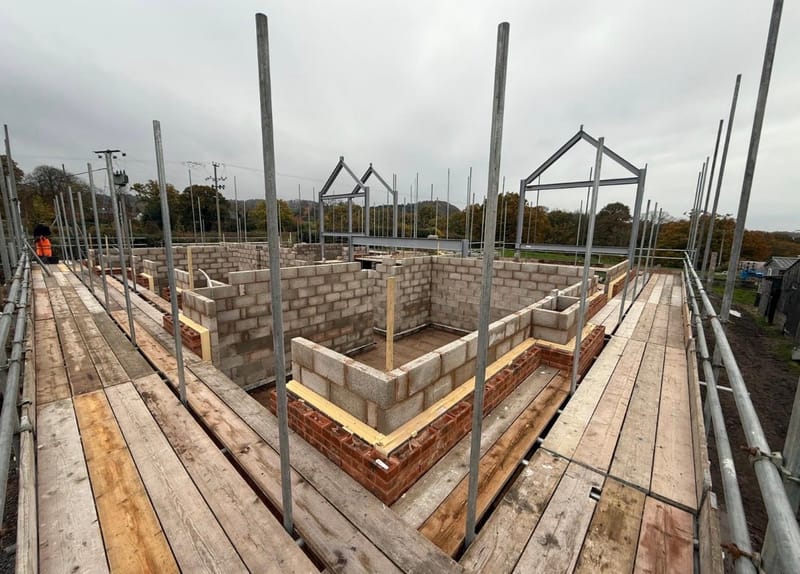
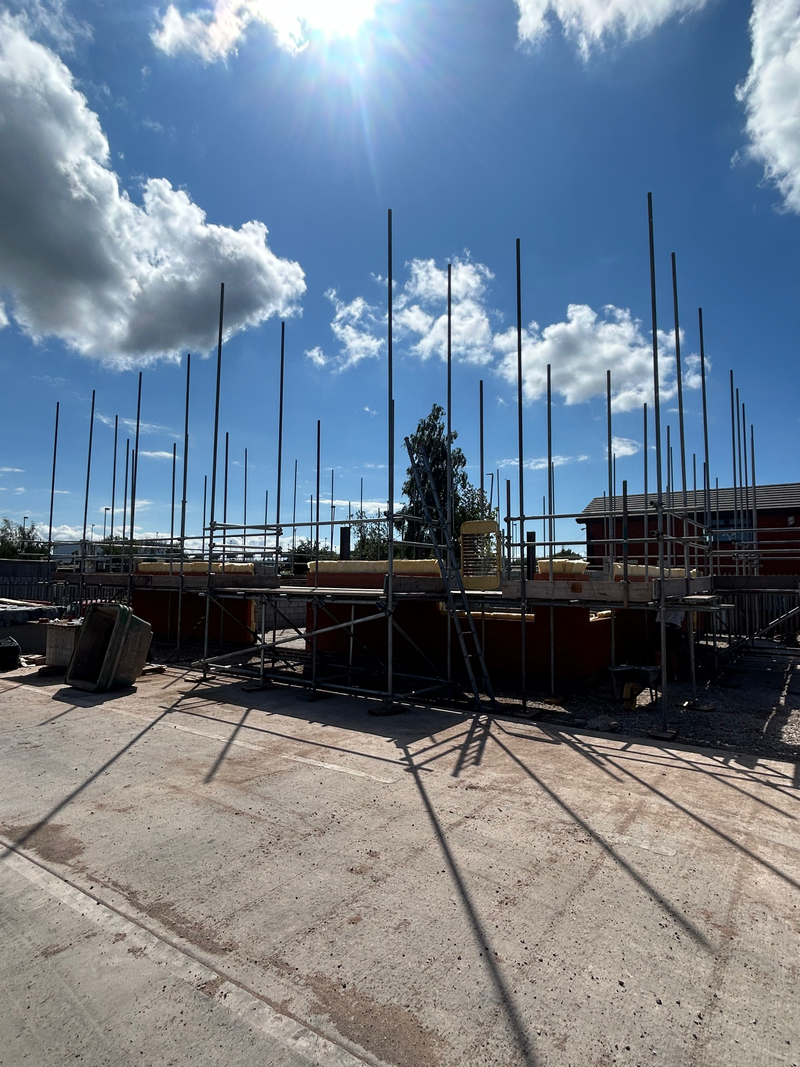
scaffolding on new-build housing sites is erected and dismantled by trained and competent scaffolders in accordance with approved designs, site rules, and relevant industry standards. The purpose of the scaffold is to provide safe access and edge protection for construction activities such as brickwork, roofing, cladding, and finishing works, while protecting workers and the public. Prior to erection, site conditions are assessed, including ground stability, plot layout, access routes, and proximity to neighbouring properties or public areas. The scaffold is set out to suit the specific house type and stage of construction. Erection is carried out progressively from the ground up, with base components installed on suitable foundations. Working platforms, guardrails, toe boards, brick guards, access ladders or stair units, and necessary ties are installed as the scaffold is built to maintain stability and prevent falls at all times. Scaffolds are inspected and formally handed over before use. Dismantling is undertaken once the scaffold is no longer required and authorisation has been given by site management. The scaffold is removed in a controlled top-down sequence, maintaining edge protection and exclusion zones until each lift is cleared. Materials are lowered safely and managed to avoid damage to the structure, completed finishes, or surrounding plots. On completion, all scaffold components are removed from the plot and the area is left clean and safe. Throughout both erection and dismantling, safety is maintained through competent supervision, use of appropriate personal protective equipment, compliance with site-specific procedures, and regular inspections. This ensures scaffolding on new-build housing sites provides safe, reliable access while supporting efficient construction progress.